Here is one of the pictures featuring the App Not Available On This Android Device. Numerous images associated with the App Not Available On This Android Device can be utilized as your point of reference. Below, you'll find some additional pictures related to the App Not Available On This Android Device.
Showing posts sorted by relevance for query App Not Available On This Android Device. Sort by dateShow all posts
Showing posts sorted by relevance for query App Not Available On This Android Device. Sort by dateShow all posts
This Android 12 Feature Makes Reading in Bed a Little Easier
This Android 12 Feature Makes Reading in Bed a Little Easier
There are many Android phones on the market, but the newest are Samsung's Galaxy S22, S22 Plus and S22 Ultra. Announced at the company's February Unpacked event (alongside the Galaxy Tab S8), the three phones have different specs and price points, but offer significant upgrades to last year's Galaxy S21. They even run on Android 12, and will likely offer a neat feature to fix your screen's annoying autorotate function while lying in bed.
Android 12, which started rolling out following the Pixel 6 launch in 2021, uses face detection to see the position of your face relative to your phone and will keep the orientation locked to whatever angle your face is in even if the phone flips on its side. So if you're reading a web page or a book in bed and roll over, the phone should recognize that you're still looking at it vertically and won't flip the screen around. Here's how to turn it on.
Make sure both toggles are over to the right.
Andrew Hoyle/CNET
First, head into your settings and scroll down to Display. In there, scroll down and tap on "Auto-rotate screen."
In this submenu you'll see the option to turn autorotate off completely, as well as a new toggle to enable face detection. Make sure both toggles are turned on.
Now your phone should still autorotate when you turn the phone on its side, but if the phone turns because you're lying down, it should recognize this and keep things the right way up for you.
For more, check out how the Galaxy S22 compares to the iPhone 13, Pixel 6, and Galaxy S21 FE.
How to tell if i have an airtag how to tell if an equation is a function how to tell if eggs are still good how to tell if your pregnant how to tell if someone is lying how to tell if a girl likes you how to lose weight fast how to screenshot on windows
How To Tell if an AirTag Is Tracking Your Location on Android
How To Tell if an AirTag Is Tracking Your Location on Android
In the last few months, Apple has come under fire for one of its latest products -- the AirTag. Although the device is designed to act as a key, wallet or luggage finder, it's misused by thieves and stalkers to track people's locations without their knowledge. Because of this, measures have been taken to help people find rogue AirTags near them, and that includes an app for Android users.
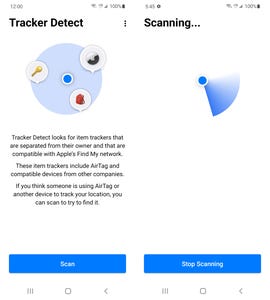
Tracker Detect, an official Apple app on the Google Play Store, allows people who don't own any Apple devices to scan for nearby AirTags, in case someone is using the tracking device to follow them around. Here's how to scan for AirTags on your Android smartphone or tablet.
Just hit Scan and search for nearby AirTags.
Nelson Aguilar/CNET
Use Tracker Detect on Android to scan for AirTags
The Tracker Detect app, available in the Google Play Store for free, allows you to use your Android to search for and track items that work with Apple's Find My network, such as AirTags, and are separated from their owner for at least 15 minutes. No Apple ID account is required.
After downloading Tracker Detect, turn on Bluetooth, open the application, agree to the terms and conditions, and tap the blue Scan button to search for nearby items. If this is your first time using Tracker Detect, you'll be prompted to give the app access to Bluetooth, which it needs to find any AirTags.
Your Android will scan for up to a minute, and if it finds an AirTag near you, it will appear as "Unknown Airtag." If you don't find anything, you can try the scan again, especially because the tracker must be separated from its owner for at least 15 minutes to appear.
What to do if you find an AirTag tracking you
If Tracker Detect notices an AirTag that's been following you for at least 10 minutes, the app will then allow you to play a sound from the AirTag so that you can more easily find the physical tracker.
If you do find the AirTag, it's up to you on how you want to proceed. If the AirTag is with you by accident, meaning it's not being used to follow you, and "Lost Mode" is enabled, you can tap and hold your NFC-compatible Android to the white side of the tag to get more information on how to return it.
However, if the AirTag is being used to track you, you can also view the serial number by tapping it with your phone, which might prove useful if you're considering contacting law enforcement and require ID proof of who might be stalking you. You can also take the back cover apart and look inside the AirTag to find the serial number.
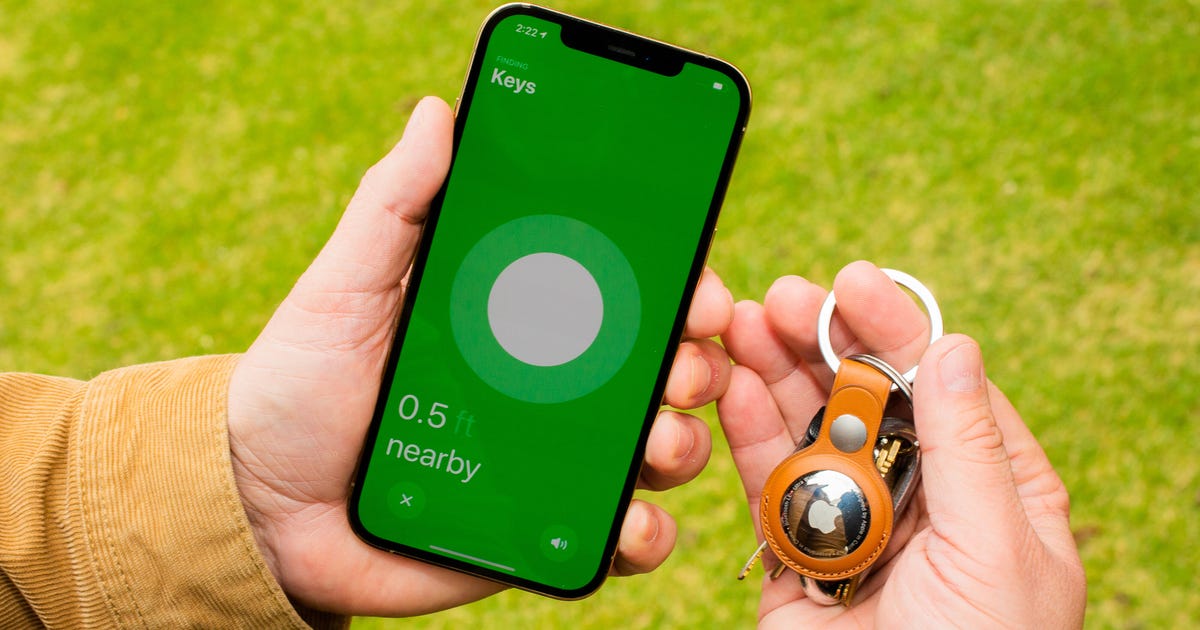
The AirTag can be disabled by removing the CR2032 battery.
Patrick Holland/CNET
How to disable an AirTag
If you want to shut down the AirTag and stop if from tracking you, Tracker Detect will provide a brief but concise summary on how to disable it:
Press down on the stainless steel back cover of the AirTag.
Rotate the cover counter-clockwise until it stops.
Release your fingers and the cover will come off.
Remove the button cell battery.
Removing the battery will notify the owner that the AirTag has been disabled, so be warned.
Unfortunately, Tracker Detect lacks some of features that are available natively on the iPhone -- most importantly, automatic background scans. On Tracker Detect, you must manually scan for AirTags each time, which can be a nuisance if you're constantly worried about being tracked.
Maybe in future updates Apple will consider adding more features to the Android app, but until then, Tracker Detect can help provide some relief if you're being tracked by AirTag.
If you're considering purchasing an Apple tracking device, despite the privacy concerns, learn more about AirTags, check out some of the best AirTag accessories out there and read about how AirTags fare against their biggest competitors.
Garmin Venu Sq review: A solid fitness tracker without the frills
Garmin Venu Sq review: A solid fitness tracker without the frills
The $200 (£179, AU$300) Garmin Venu Sq has almost every fitness- and health-tracking feature you could want in a smartwatch for less than competitors like the Apple Watch ($349 at eBay) and Fitbit Versa 3 ($170 at Target). It has a bright LCD touchscreen, built-in GPS, SpO2 (blood oxygen) tracking and up to six days of battery life, which makes it a compelling buy, especially if you want a watch that's compatible with both Android and iOS.
It's not the most premium-looking smartwatch out there and it misses out on features like a voice assistant and altimeter, but it makes up for it in health and fitness features that elevate it from the rest.
A functional watch without the wow factor
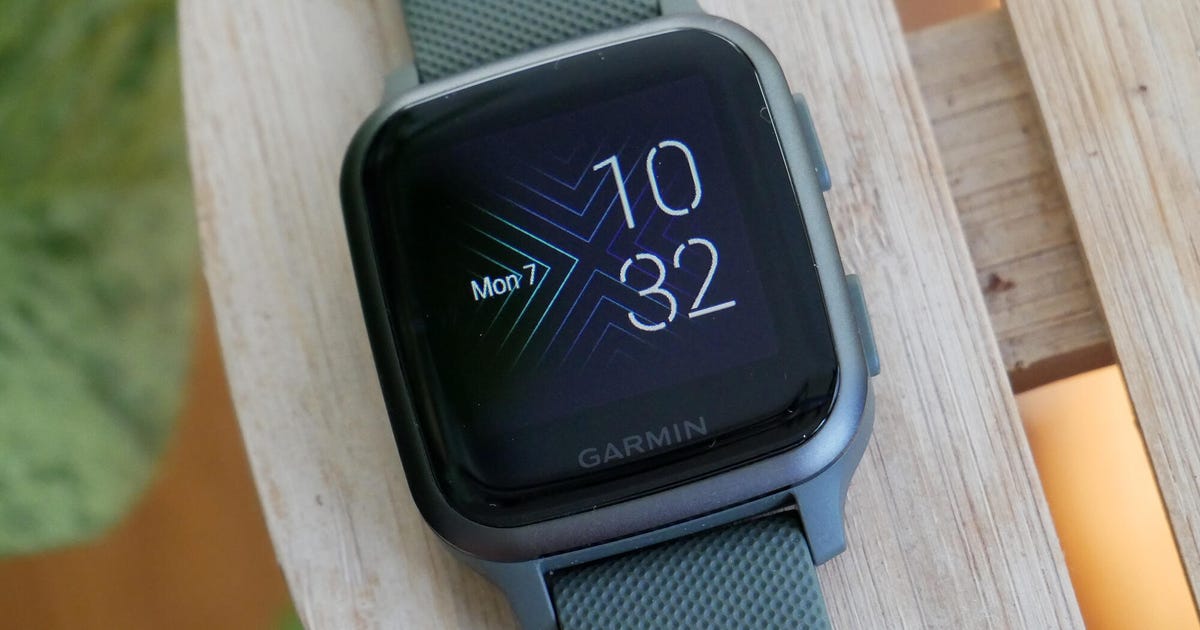
Like the name suggests, the Venu Sq has a square watch face with rounded edges, unlike the original Garmin Venu and almost every other Garmin sports watch with circular designs. Its 1.3-inch color LCD display feels a bit cramped compared to other Garmin watches, but it's clear and easy to read even in bright sunlight and you can keep the screen set to always-on. Having used the larger Garmin Venu for a while, the smaller size of the Venu Sq took a bit of getting used to, especially during workouts when I couldn't see as many stats at a glance and had to scroll to find the right metric like heart rate, which was all the way on the last page.
The overall build quality is sturdy enough thanks to an aluminum bezel, although the plastic case and buttons make it feel like a cheaper watch than it actually is, especially compared to something like the Apple Watch SE ($280 at eBay), Galaxy Watch Active 2 ($200 at Amazon) or Fitbit Versa 3 for example, which all have metal finishes and OLED displays. The Venu Sq has two side buttons: one to start/stop activities and the other to navigate back and forth between menus. Once I figured out which did what, it took me a few days to get completely comfortable using them to navigate the interface.
My biggest complaint with the Venu Sq's design is the vibration motor, which is not particularly strong. Half the time it was the buzzing noise, not the vibration itself, that clued me in on a notification.
Blood oxygen monitor and heart health alerts
Garmin's biggest strength is in health and fitness tracking, with the Venu Sq squarely hitting the mark. It has an SpO2 sensor to identify blood oxygen levels, either as a spot check or automatically throughout the day and night, similar to the $399 Apple Watch Series 6. Although setting it to monitor constantly will reduce battery life a lot faster. It's also hard to find the SpO2 option in the menus and I found that adding it as a widget in the settings is the best way to get it to pop up on your wrist.
Unfortunately I didn't have a pulse oximeter to compare the readings from the Venu Sq to determine accuracy. Either way, it's important to note that the Venu Sq has not been approved to be used as a medical device and should not be used for diagnostic purposes. Always consult with a physician or other qualified health provider about any health-related issues you may have about a medical condition or health objectives.
Though the Venu Sq doesn't have an ECG, or electrocardiogram, like the Apple Watch Series 6 and Galaxy Watch 3 ($399 at Amazon), it does give you the option to receive high and low heart rate notifications that will let you know if your heart rate spikes above or falls below what it considers to be a healthy threshold.
The Venu Sq also uses heart rate variability to determine your stress levels, but doesn't really offer much guidance on how to decrease your stress. I found Garmin's Body Battery meter, which takes into account heart rate variability readings, activity levels and sleep, a more accurate representation of how my body was working that day and helped me decide what kind of workout to do and how hard to push myself. It works better than the Stress Management Score in the Fitbit Sense ($240 at Target) that is a bit more difficult to interpret for me.
Garmin also offers breathing rate and estimated VO2 max, the maximum amount of oxygen your body can use during exercise, which can be used to gauge and improve athletic performance. The higher the number, the more fit you are.
Screenshot by Lexy Savvides/CNET
Sleep tracking is also great on the Venu Sq and clearly identifies your sleep stages of REM, deep and light sleep. You'll also be able to see breathing rate and SpO2 levels in the morning. The downside is that the Garmin Connect app doesn't give you any tips on improving your sleep quality. Menstrual cycle tracking is also available on the Venu Sq and like other Garmin watches, it offers pregnancy tracking to log symptoms and monitor baby movement.
The Venu Sq has a range of workouts preloaded onto the watch, including cardio, strength, Pilates and yoga, so you can follow along with a preset routine on your wrist. There aren't any visual cues on the screen though, just text cues, so if you're doing yoga for example, you'll need to know what "standing forward bend pose" or "low lunge pose" means to get the most out of the routine. You can also build your own workout, such as a circuit of weights, a Pilates routine or a run, within the Garmin Connect app and sync them to the watch. There are also over 50 additional Garmin-created workouts you can load.
On top of these preloaded routines, the Venu Sq can track more than 20 different workout types, from the usual running and walking variants to golf and pool swimming. There's also a personal running coach you can use to help you train for a race or to hit a set goal. It doesn't give you personalized feedback on your form or audio cues like the Galaxy Watches ($295 at Amazon), for example, instead it's more a guide for when you should warm up or how long you should run for, displayed on your wrist.
The Venu Sq has built-in GPS, meaning you don't have to rely on your phone for distance tracking when you're outside. Just be warned that it does take at least 30 seconds to lock on to a GPS signal when you are outside (regardless of whether you have your phone with you or not), which seems like an eternity if you're an impatient runner like me who just wants to get on with it. Once it finally locked though, it tracked my route accurately.
The downside is that there is no gyroscope or altimeter on the Venu Sq, so if you need accurate elevation data you'll likely want to look elsewhere. The Garmin Connect app does a good job of clearly showing you all the details after your workout, but it doesn't dive any deeper into metrics than what similarly priced rivals like the Apple Watch SE or Fitbit Versa 3 offer.
Like other Garmin watches, the Venu Sq has Garmin Live Track which lets you share your location with a safety contact when you are doing an outdoor workout. It does however require a cellular connection, so you will need your phone with you to use this feature.
You can customize the options on this screen to show only your favorite workout types to track.
Lexy Savvides/CNET
Just enough smarts for most people
While the Venu Sq is geared towards fitness and health tracking, that doesn't necessarily mean you'll miss out on smartwatch features. Like almost every other watch, the Venu Sq displays notifications from your phone and pings your phone to locate it if you lose it within Bluetooth range. You'll be able to see call notifications come through regardless of which phone you have the watch paired with, but only Android users will be able to decline calls and respond to text messages from the watch with prewritten responses. There is no speaker or mic onboard so you can't use voice-to-text responses.
The Venu Sq runs Garmin's own operating system (Garmin OS) which is not as seamless as that of Apple or Samsung's smartwatches, but I found it to be stable and more responsive than the Fitbit OS. It's faster to sync updates and doesn't experience any lag in selecting menu options or opening apps.
The biggest pain point for me when using the Venu Sq paired with an iPhone ($500 at Best Buy) has been notifications. The Garmin Connect app on iOS doesn't let you filter out what notifications come through on your wrist and simply mirrors whatever notifications you have set up on your phone. It might not be a deal breaker for many, but I like to push only the most important notifications such as calls and text messages to my wrist, rather than everything that my phone shows. Android users get more control over which notifications come through.
Lexy Savvides/CNET
If you want onboard music storage, you'll need to opt for the music edition of the Venu Sq that costs $50 more, which is the version I tested in this review. The Venu Sq Music lets you store music for offline listening from apps like Spotify (with a Premium subscription) or songs you already own. It's also the watch to get for faster data transfers as it has Wi-Fi and Bluetooth connectivity, whereas the regular Venu Sq only uses Bluetooth.
Garmin has plenty of watch faces to choose from, including third-party options to help personalize the look, plus a fairly wide selection of apps through the Connect IQ Store (a separate app you need to download on your phone). You can also make contactless payments with Garmin Pay on all versions of the watch. The main Garmin Connect app is where you see all your stats and change settings on the watch, while the Connect IQ Store is for adding apps and watch faces.
The Venu Sq, however, lacks a voice assistant, a feature that by now has become standard for most of its similarly priced competitors. This might not be a deal-breaker for you, but it means you miss out hands-free voice control, which I like.
A week's worth of battery life
The Venu Sq has great battery life and you can get up to six days worth of use before you'll need to charge it up, though that number may start to whittle down if you're using it for a lot of GPS workouts, listening to music or continuously tracking your blood oxygen levels. Garmin quotes up to eight hours of battery when playing back music, 14 hours if you are using it in GPS mode, or up to six hours with GPS and music playback.
A great fitness watch without extra bells and whistles
If you're willing to sacrifice a few smart features for better health and fitness tracking, the Garmin Venu Sq is a solid choice that works with Android or iOS. That said, I do wish that Garmin wouldn't charge the extra $50 for the music version, as it does alter the value proposition quite a bit, particularly if you are an iPhone user who might also be considering the Apple Watch SE which, at that point doesn't cost you that much more.
Twitter blue what to know about the subscription and billing twitter blue what to know about the subscription and services twitter blue what to know about the subscription economy twitter blue what to know about the subscription box twitter blue what to know about the subscription racket twitter blue what to know about the subscription business twitter blue what to know about the subscription addiction twitter blue what to know about the subscription server twitter blue what to know about the subscription center twitter blue what to know about the bible
Twitter Blue: What to know about the subscription and features, including undo tweets
Twitter Blue: What to know about the subscription and features, including undo tweets
For those longing for more control over their tweets, your time has come. On Tuesday, Twitter rolled out Twitter Blue, a subscription service that (finally) allows you to undo a tweet, among other desired features.
First available in Australia and Canada back in June, the paid version is now open for users in the US and New Zealand.
The premium service also allows you to read news ad-free, edit a published tweet, organize your bookmarks into folders, pin conversations in your DMs, upload videos up to 10 minutes long and more.
If you're interested in learning more about all the exclusive features you can get only on Twitter Blue, here's everything you need to know about the new premium monthly subscription service. For more on Twitter, here's how to avoid Twitter scams. Here's how to stop Facebook from tracking you across the web and how to find and delete your Google data now.
What is Twitter Blue and what does it do?
Twitter Blue is a subscription service that offers exclusive features for a monthly fee. On Twitter, you'll frequently see people talk about which features Twitter should have -- and several of the most popular requests have made their way into the paid service.
The most prominent of these features is undoubtedly Undo Tweet -- which isn't exactly the edit tool that some have requested, but it does offer a way to quickly fix a published tweet. Here's what comes with a Twitter Blue subscription:
Undo Tweet: Not quite an edit tool, but you can preview a tweet after publishing it and revise it. You have up to 60 seconds to undo a tweet, reply or thread you've posted to Twitter.
Ad-free articles: Read stories from The Los Angeles Times, The Washington Post, BuzzFeed, Rolling Stone and more -- without advertisements. More than 45 sites are available with others coming. Also, a piece of your subscription fee goes directly to these sites. Note that "ad-free" applies just to these articles and not elsewhere in Twitter.
Reader for threads: Long threads are now easier to read thanks to the new Reader Mode. As you scroll through a thread, large tiles will showcase each tweet underneath, displaying only the tweet and any accompanying videos or photos. Distractions like the username, avatar, date and numbers are all gone when enabled. You can also customize text size.
Bookmark folders: Bookmark tweets? Now you can organize your messy bookmarks into folders so that they're easier to find. Whenever you bookmark a tweet, you'll be asked if you want to add it to a folder.
Custom navigation: If Twitter's navigation bar doesn't work quite like you want, you can customize it and add bookmarks, lists, profile and monetization icons (iOS only).
App Icons: You now choose a different Twitter app icon for your home screen: eight permanent icons and three seasonal ones (iOS only)
Themes: Choose between six theme colors: blue (original), yellow, red, purple, orange and green (iOS only).
Experimental features: Use unreleased experimental features, such as pinned DM conversations and 10-minute long video uploads (desktop only).
How much does Twitter Blue cost?
Here's how much a Twitter Blue subscription will cost per month:
US$3
AU$4.49
CA$3.49
NZ$4.49
However, these prices might change. On the Twitter Blue subscription page, Twitter calls this an"introductory price."
Is free Twitter going away?
No, the Twitter you know is still available and free to use. Twitter Blue is an opt-in service.
Is my account eligible for Twitter Blue?
Twitter Blue is currently available on iOS, Android and the web in four countries across the globe: US, Australia, Canada and New Zealand. Although the paid service may eventually spread to other countries, a company spokesperson told CNET, there are currently no plans for a bigger roll out.
How to sign up for Twitter Blue
You can subscribe to Twitter Blue on your mobile phone or from your computer.
On iOS or Android, do the following:
1. Open the Twitter app.
2. Tap your profile image in the top left corner to access the Profile menu.
3. Tap Twitter Blue.
4. Tap the Subscribe button at the bottom of the page.
5. Make a payment (including Apple Pay on iOS or Google Play on Android).
If you're on the web, signing up for Twitter Blue is slightly different:
1. Go to the Twitter website.
2. On the left, in the Profile menu, click More.
3. Click Twitter Blue.
4. Click the Subscribe button at the bottom of the page.
5. Make a payment (made via Stripe).
Now that I have Twitter Blue, how do I undo a tweet?
Once you have Twitter Blue, you can immediately begin to undo original tweets, replies, threads, quote tweets and poll tweets. After firing off a tweet, you'll automatically be redirected to your posted tweet, with the opportunity to Send Now -- or permanently post the tweet -- or Undo, which gives you 20 seconds (by default) to go back and make any edits, such as fix grammatical mistakes, tag someone or simply get rid of an embarrassing tweet.
You can customize how Undo Tweet works. In your Profile menu, go into Twitter Blue and tap Undo Tweet. Here you can toggle on and off how it works for different types of tweets and change the amount of time you have to undo a tweet (choose between 5 and 60 seconds).
How do I get pinned conversation, longer video uploads and other experimental features?
Since 2019, Twitter has tested out experimental features via Twitter Developer Labs, a program that allows the developer community to try out features that might possibly make their way to Twitter one day.
Thanks to Twitter Blue, you can now get your hands on many of these beta features, through a setting called Labs. Currently, there are only two features you can test:
Pinned conversations: Pin any conversation in your DMs to the top of the page.
Upload longer videos: Upload up to a 10-minute long video to Twitter (only available on desktop).
Eventually, more experimental features will come to Labs for Twitter Blue users. You can get real-time updates at @TwitterBlue.
How to cancel your Twitter Blue subscription
No longer interested in paying for Twitter Blue? Luckily, Twitter lets you pause or cancel your subscription.
1. Using the device that you purchased Twitter Blue on, make your way to the Twitter Blue option in the Profile menu.
2. Next, scroll down and tap Manage subscription.
As long as you're on the device you used to sign up for the subscription, you can cancel from here. If you do cancel, you'll be able to access your subscription until it ends.
Twitter isn't the only platform making big changes. YouTube is looking to remove dislike counts from their videos and Instagram announced it's testing a new feature to help prevent you from scrolling too much.
Xiaomi Mi Band review: Ultracheap fitness band gets the job done
Xiaomi Mi Band review: Ultracheap fitness band gets the job done
Though still not a household name outside of Asia, China's Xiaomi is gaining in global market share for smartphones , and it's not stopping there. Like so many of its rivals, it's also breaking into wearables, with its debut device being the Mi Band fitness tracker.
Perfect for anyone who wants to try out a fitness tracker, the Mi Band's minor flaws are easily ignored, especially when you consider its exceptionally low price. On sale in China at 79RMB (which converts to around $13, £7.50, AU$13.50), it undercuts other basic models like the Misfit Flash and the Fitbit Zip that retail at around $50 (roughly £3o or AU$60) while still delivering the same features.
Good luck getting one, however. There are no plans yet to release the bracelet for other markets, so you'll have to either get it through an online reseller (and pay a little premium), or hope you manage to snag one while in China at the Xiaomi online store.
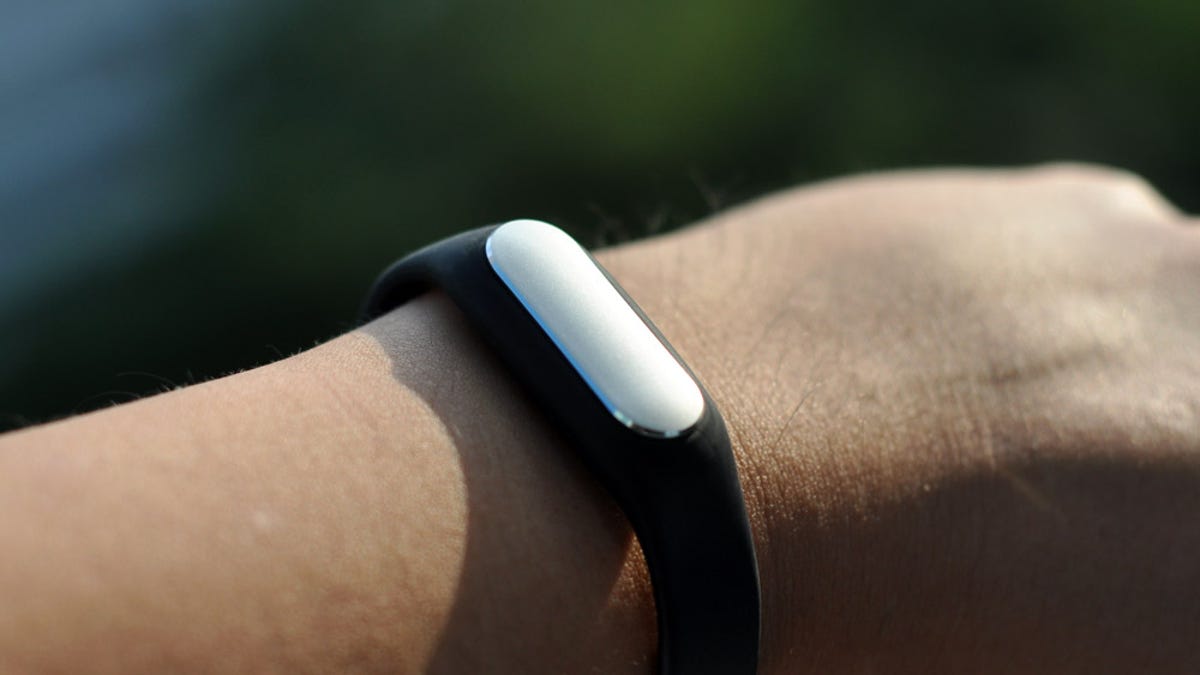
The Mi Band is actually a dongle on a bracelet.Aloysius Low/CNET
Design
Xiaomi keeps the design simple for the Mi Band. There are no buttons you need to press and the Mi Band comes in two parts -- a rubber strap and the fitness module. Once on the wrist, the 13g Mi Band doesn't stay in your mind.
As it's water-resistant -- the Mi Band has a IP67 rating -- you can bring the Mi Band with you in the shower, though the rubber strap is uncomfortable when it's wet. The strap is adjustable, so you can either wear it loose or tight depending on your preference.
The Mi Band lacks a screen. Instead, it has three indicator lights that flash when you do a "look at your watch" gesture. However, the Mi Band is really picky about when it lights up; you'll have to actually have your arm fully extended at your side, then raise it up like you're looking at a watch before it works.
This shows I'm two-thirds of my way through my daily target of 8,000 steps.Aloysius Low/CNET
The three lights show your walking progress for the day, so if you set the target to, say, 8,000 steps, when you hit around 5,000 the second light will be fully lit. When you hit your target, the Mi Band will vibrate to alert you while the lights will blink for a few seconds.
You'll need to take out the dongle for charging, but you'll really only need to do this once every 30 days or so. The Mi Band comes with a custom USB cable that attaches to the dongle, and you can plug that into a PC or a USB charger.
Mi Band app
Unlike the more fully featured app that comes with the higher-end Jawbone Up24 , the Mi Band app is clean and simple and supports both English and Chinese. There's no option to measure your caloric intake -- instead, the app just shows the steps you've taken and your sleep patterns, such as when you fell into deep sleep.
You can also set an alarm to wake up to, and the Mi Band will buzz at the appropriate time. An early bird alarm is also available and will wake you 30 minutes before your preset time if the band detects that it's the best time to wake you up.
Screenshot by Aloysius Low/CNET
Apart from the two functions mentioned above, the Mi Band app also adds a sit-up and jump rope tracker. You'll need to manually activate this, though, as the Mi Band itself only works for your steps and sleep. There's also an option in the settings menu to let you vote for other sports such as cycling in future updates.
One feature that's limited to only Xiaomi's phones is a proximity unlocker. If you're holding the phone in the same hand that's wearing the band, you won't need to enter a passcode or perform a pattern unlock.
Currently, the Mi Band only works with Android 4.4 devices, and there aren't any third-party apps available that support this. It's also unknown if Xiaomi will ever add iOS support, though there are pictures on Weibo from Xiaomi developers showing the app running on an iPhone 6 .
Battery life
As mentioned, the Mi Band claims a 30-day battery life, and two weeks with the Mi Band have shown me that this looks to be true. The fitness band still had 75 percent left, meaning it could last as long as 2 months instead of the promised 1. This is pretty impressive, given that the more expensive Jawbone Up24 is only rated for a week. However, the Mi Band's rechargeable battery can't compare to the six-month battery life of the Misfit Flash or the Fitbit Zip.
Charging the Mi Band is quite easy to do.Aloysius Low/CNET
Conclusion
Given the Mi Band's absurdly low price, it's impressive and gets a free pass for its minor flaws. The rubber material used in the band takes a while to get used to, but it's light and not at all unpleasant to wear most of the time.
It's really hard to see how other screenless fitness bands can now justify their exorbitant prices, especially when the Mi Band does the exact same thing but is a lot more affordable. Of course, these fitness trackers do have options such as keeping track of your caloric intake, but these are software-based, via an app, so it's possible Xiaomi may be able to add these in as well in a future update.
Lastly, getting your hands on the Mi Band can be challenging since it's limited to China for now, and until the company starts making it globally available, people in other countries will likely will have to pay a lot more for the current fitness bands. With that in mind, I still heartily recommend the Mi Band, even if you have to get it at a premium from an online reseller. You'll still save quite a bit compared with other brands, and the Mi Band makes for a great entry-level fitness band to try out.
Pixel Buds A-Series review: Excellent headphone value for Android users
Pixel Buds A-Series review: Excellent headphone value for Android users
Google's Pixel Buds A-Series are kind of unusual, in that they're new but not exactly an upgrade. They look and sound very similar to last year's Pixel Buds 2, which debuted at $179 but are now selling for less. However, instead of adding new features -- like active noise canceling -- they've actually lost a few. Why? They only cost $99: The "A" stands for affordability. That new lower price is the real story here and what makes these a bonafide true-wireless value, particularly for Android users. They're available for preorder now and ship June 17.
Like
Lower price
Virtually the same likable design and sound as Pixel Buds 2 but weigh slightly less
Hands-free Google Assistant
Very good sound for the price
Excellent call quality
Compact charging case
IPX4 sweat-resistant (splashproof)
Don't Like
No swipe controls for volume up/down
No real feature upgrades vs. earlier model
Average battery life
As I said, lookwise, not much has changed. They feature the same likable design as the Pixel Buds 2, with the integrated sport fin and relatively discrete look. They don't stick out of your ears as much as many buds do and not only did they fit my ears securely but I found them comfortable to wear.
What's different?
There are some small differences, however. The Pixel Buds 2 were already relatively lightweight, but these are even a tad lighter -- Google says the Pixel Buds A are "about 20% lighter across the earbuds and the case" compared to the Pixel Buds 2. Along with Clearly White, they come in a new Dark Olive color and incorporate slightly different materials and aren't two-tone. The inside of the buds have a glossy, as opposed to matte, finish and its color matches the color of the outside of the buds. Additionally, the inside of the case also has a glossy finish and its color matches the color of the buds.
On the surface, the Pixel Buds A look very similar to the Pixel Buds 2.
David Carnoy/CNET
The other thing you'll notice is that the nozzle that you attach the ear tip to is now made of plastic instead of metal, which presumably is more durable. Also, the Pixel Buds A have two charging pins as opposed to three and they're missing a sensor. I was worried that meant they had no ear-detection feature (that's the feature where your music pauses when you pull the earbuds out and resumes when you put the buds back in), but it turns out that Google's engineers were able to optimize in-ear detection in the Buds A with one IR sensor, according to a spokesperson. So no issue there.
The case is the same -- it's nice and compact -- but unlike the Pixel Buds 2, the A-Series doesn't have wireless charging, just USB-C charging. These are also missing the swipe for volume control feature -- you can't run your finger across the bud to adjust volume, you now have to use the volume controls on the device you're streaming from or access Google Assistant by simply saying "Hey. Google," then tell it to raise or lower volume. For Android users Google Assistant is always-on, listening for your voice commands like Siri does with the AirPods, so you don't have to tap a button to access it (unless you turn off the feature).
But there are subtle differences, with the Pixel Buds 2 (left) having a metal nozzle, an extra sensor and three charging pins instead of two.
David Carnoy/CNET
Lastly, the A-Series doesn't have the Attention Alerts feature that detects certain ambient sounds, like a baby crying, dog barking or an emergency vehicle siren, and alerts you while you're wearing the buds. I have a feeling that not too many people bothered with that experimental feature, but a lot of people liked the swipe to control volume feature -- it's one of the Pixel Buds' signature features. Personally I can live without it for the price reduction.
Similar performance
Like the Pixel Buds 2, the Pixel Buds A are equipped with Bluetooth 5.0, but they're powered by a new chipset. When the Pixel Buds 2 first came out, there were widespread complaints that the wireless connectivity wasn't rock solid -- people were getting some dropouts -- and while subsequent firmware upgrades improved performance, Google appears to have addressed any connectivity issues with the A-Series. I had almost no dropouts during my testing time, although like every other true-wireless earbud these aren't completely infallible.
As far as I can tell, they sound the same as the Pixel Buds 2 -- or very close to them anyway. To get optimal sound, you do need a tight seal, but you should be able to get one with one of the three included eartips. These are comfortable earbuds and they do stay in your ears well and can be used for sporting activities, including running. They have an IPX4 water-resistance rating, which means they're splashproof, the same as the AirPods Pro.
Like the Pixel Buds 2, the buds don't stick out of your ears as much as some other buds do.
David Carnoy/CNET
They sound quite good overall, with ample bass that's not loose or bloated and have decent clarity with a bit of sparkle in the treble. They don't have the more refined, richer, more open sound of higher end earbuds like the Sennheiser Momentum True Wireless 2 or Sony's WF-1000X series, but their sound measures up well against other earbuds' sound at his price. There's a bass boost mode along with an adaptive sound mode that raises and lowers volume according to the amount of ambient noise around you, but the EQ options in the app are limited.
They support streaming using the AAC codec, which both Apple and Android devices use for audio streaming, but not AptX streaming.
They should work well for a variety of music genres, but I did notice they were a bit challenged when I hit them with some complicated rock tracks where a lot of instruments were playing. Again, they lacked the more refined and articulate traits of higher-end buds, but most people should be quite happy with their sound.
I did think these were really good for making calls. To test call quality, I hit the streets of New York and made calls while traffic was passing. The buds did a very good job reducing a lot of background noise during calls and callers said they could hear my voice clearly. For calling, they measured up well against the AirPods Pro, so they seem top-notch in that department.
Battery life remains slightly underwhelming for non-noise-canceling earbuds. They're rated at five hours at moderate volume levels and you can get an extra 19 hours from the charging case.
Note that there's no multipoint Bluetooth pairing that gives you the option to pair the buds with two devices simultaneously -- such as computer and a smartphone -- so you can seamlessly switch between the two when a call comes in. That's a somewhat rare but useful headphone feature. However, you can pair these with multiple devices, just not two at the same time.
The Buds have are splashproof with an IPX4 water-resistance rating just like the AirPods Pro.
David Carnoy/CNET
Pixel Buds A: Final thoughts
As I said, this is a little bit of an unusual product because it's next-gen but not really an upgrade for owners of the previous model. But I think it's a smart move by Google. As it tries to expand its audience for its true-wireless earbuds, this sub-$100 price is where it needs to play.
You've got Samsung's Galaxy Buds Plus selling for around $100 these days and, even though they've been out a while, they remain a good value at that price with very good sound (they have a little more bass than the Pixel Buds) and excellent battery life. The Anker Liberty Air 2 Pro and Amazon Echo Buds are priced around $130. Both those models feature active noise canceling and sporadically go on sale for $100, so they're also direct competitors that deliver comparable sound (I like the Anker Liberty 2 Pro's sound slightly better). None of those models have hands-free Google Assistant, however.
So while I don't know if the Pixel Buds A are necessarily any better than those competitors, when you factor in their strong design and solid performance, they're a very good value at $99 and a top pick for Android users. True, they work with Apple devices, but they lack certain features like hands-free Google Assistant or an iOS companion to upgrade the firmware. So Apple users should take a pass unless they also have an Android device.
How to buy a drone for kids how to buy a car how to buy a business how to buy a domain name how to change yahoo to google how to get free robux how to pronounce
How to buy a drone
How to buy a drone
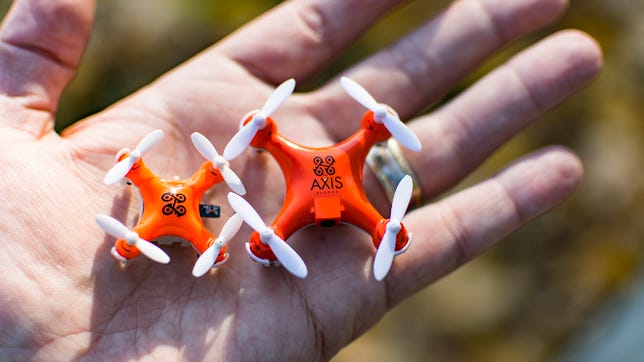
For me, it all started with the Hubsan X4 H107C, a palm-size quadcopter with a low-res camera that can be picked up for less than $40 (or about AU$100 or £45). It has a paltry 5 to 7 minutes of flight time and I crashed it loads, but I was hooked and wanted to fly as much as possible.
This is why quadcopters, multirotors, unmanned aerial systems (UAS), unmanned aerial vehicles (UAV), drones or whatever you want to call them, have become so popular: Unlike radio-controlled planes and helicopters, the entry cost can be very low, the learning curve shallow and, depending on the size, they can be flown in your backyard or living room.
In the course of buying and maintaining my own and testing and reviewing drones for CNET, however, there are some things I've learned that you should consider before entering the hobby -- even if your plan is to just start with a toy drone like I did. But, before I get into all that, here are my go-to recommendations for consumer drones at the moment.
Best toy drones
Joshua Goldman/CNET
Along with the Hubsan X4, I'm a fan of the Syma X5C because it's inexpensive at around $40 (or about AU$50 or £35). You can easily find parts and extra batteries for it, and its size -- while still small and light -- makes it easier to keep track of outdoors than smaller models. It even has a camera on it, albeit a pretty crummy one.
For flying indoors, I recommend Parrot's Minidrones like the Mambo, if you just want something stable you can fly with your phone for a few minutes. They're available in several different styles and start at about $100 (or about AU$150 or £100), though older models can be found for considerably less. They're great for younger pilots, too, because they have sensors to help them hover in place unassisted -- very handy when navigating around the house.
There is also a new breed of mini and nano quads that are a lot easier to fly, thanks to the addition of air pressure sensors. Look for models such as the Aerix Vidius HD that offer an altitude assistance or hold feature, which keeps you from having to constantly adjust the throttle so you can concentrate on directional controls.
Best camera drones
Joshua Goldman/CNET
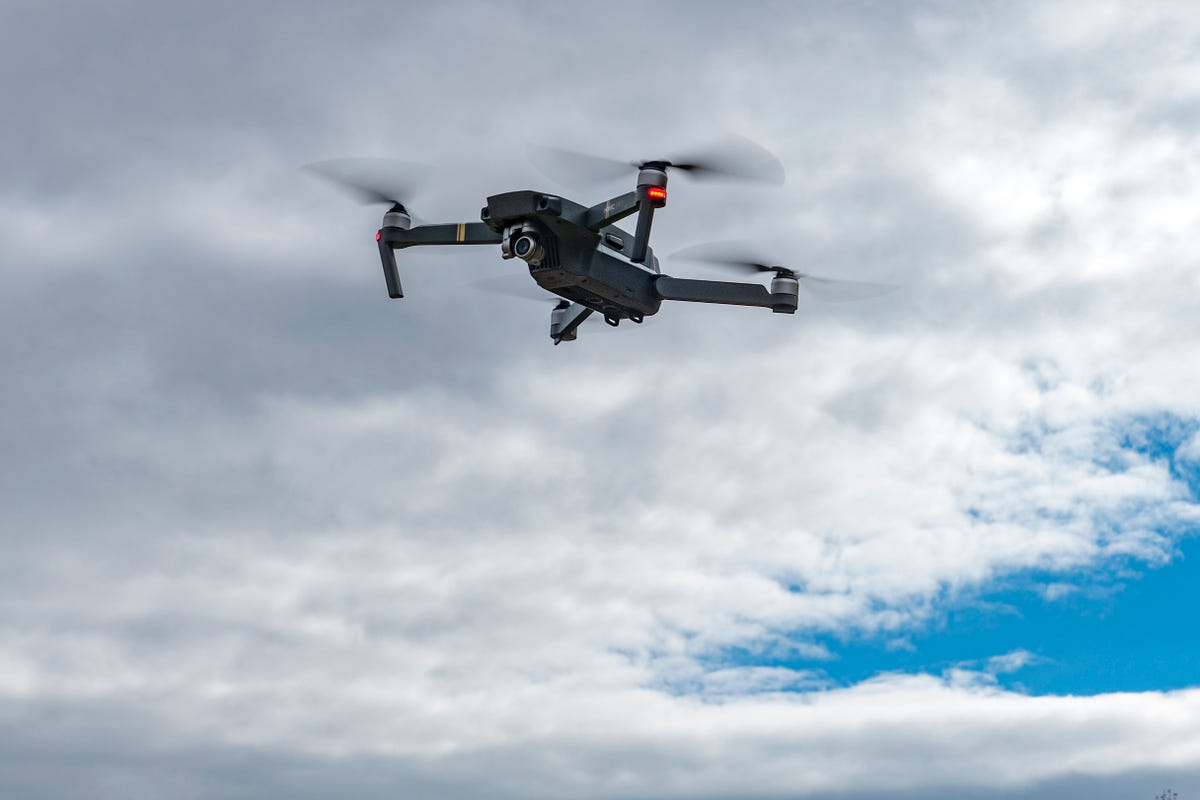
DJI is the leader in flying cameras, whether you're looking for something to get started in aerial photos and video or want an out-of-the-box solution for TV and film. Of course, the more money you spend, the better the features get. If you're looking for great performance and features with a design so small you can fit it in your backpack with room to spare, go with the DJI Mavic Air.
If you don't like the sound of dropping a lot of money on a camera that's permanently attached to a drone, check out GoPro's Karma drone. The camera-maker is exiting the drone market, but it's going to sell through its Karma inventory and continue to support its one and only quadcopter. The Karma uses one of the company's tiny action cams, so when you're not flying you can use the camera for whatever else you want to capture on land or in the water. But, more importantly, the motorized gimbal that stabilizes the camera in the air can be removed and attached to an included handgrip, giving you the option to shoot stabilized video and photos on the ground.
Best selfie drones
Yuneec Breeze 4K
Joshua Goldman/CNET
Small like a toy drone, but with the smarts of higher-end camera drones, selfie drones are basically the point-and-shoot cameras of the sky. Selfie drones are small enough they're unobtrusive in public places: You fly them with your phone instead of a big controller, and simple onscreen controls and automated shooting modes let you capture dramatic shots with little more than some taps and swipes.
DJI's Spark is the most versatile in the category and is loaded with advanced tech to make flying simple and safe. However, if you want to save some money, consider either the Yuneec Breeze 4K and Hover Camera Passport. The Breeze, pictured above, has special shot modes that will make you look like a pro pilot. With just a few taps in its mobile app, you can program it to perform special camera moves like 360-degree orbits or direct it to fly up high and reveal the scene around you. And if you don't want to control it with your phone, Yuneec has a small video-game-style controller and a first-person-view headset available.
The Passport's unique folding design makes it not only superportable, but safe, too, with propellers that are completely protected by its frame. After launching just tap twice on your phone screen to make the drone follow your face. Once you get your shot, the drone folds down to the size of a hardcover book.
Best racing drones
Fat Shark 101
Sarah Tew/CNET
Unless you're really a tinkerer and know your way around a soldering iron, I recommend first-time buyers stick to ready-to-fly (RTF) models. The thing is, when it comes to racing drones, most people in the hobby build their own. That's not to say RTF racing quads don't exist, but they aren't as abundant as drones for photography or just having a few minutes of fun.
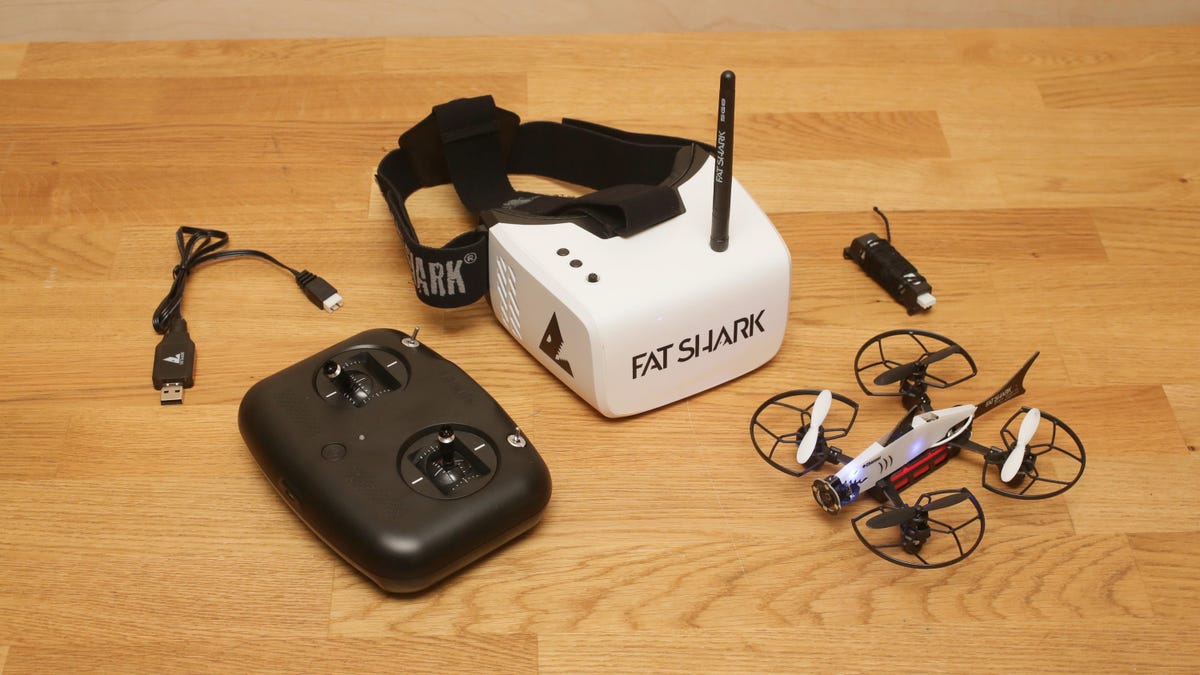
If you think you might be interested in racing and want a cheaper entry point, check out the Fat Shark 101. The kit comes with everything you need to get started -- a quad, a simplified controller and an FPV (first person view) headset -- and doesn't require a ham radio license from the FCC. They even throw in a couple of gates to practice flying through and access to a flight sim. The best part is, you can upgrade, so the goggles will work with other drones, as will the controller.
If you want to jump right in and get a larger racer, consider the UVify Draco. It's ready to fly and you can buy it direct from UVify with a controller and FPV goggles if you don't want to worry about picking those out on your own separately. The drone is built tough, but the design is modular, so if you snap a motor arm, you can just pop a new one on and get back in the air. (The company also has a new micro racing quad called the Oori that it says is the fastest RTF drone for its size.)
You can also check out sites like Team Blacksheep and GetFPV.com that sell complete kits to assemble yourself as well as RTF options. The latter will also has a great section for beginners with part explainers. Sites like Banggood, HeliDirect and Horizon Hobby are also excellent for finding parts and batteries, too.
The seven things to consider before you buy
Cheaper drones aren't necessarily for beginners
Tiny inexpensive quads like these can be a pain for first-timers.
Joshua Goldman/CNET
Like many things in life, you get what you pay for with drones: The more money you spend, the more features you get that make flying easier. For example, while the Hubsan X4 quad I mentioned at the top isn't a bad place to start, it lacks sensors found on higher-end drones to help it hover in place on its own or return to you if you get in a jam.
If you're just starting out, GPS is invaluable and worth paying more for if you're looking for stable flying out of the box, especially for photos and video. GPS is something you won't typically find on toy-grade drones, and although they're good to practice with, new pilots might find toy drones to be incredibly frustrating.
Flight times are still relatively short
Battery life is still the suck when it comes to drones. Several camera drones claim a battery life at or around 30 minutes. When a manufacturer gives you a flight time, that is typically reached under ideal testing conditions in a controlled environment. The faster you fly, the more weight you add, the stronger the winds you're flying in, the quicker the drone will sap its battery. Plus, there's the time it takes to get up in the air and land that's not accounted for in that time.
My general rule of thumb is to take whatever the manufacturer claims and subtract 5 to 10 minutes for midsize drones. Toy drones typically get between 5 and 7 minutes of good flying, though some can hit the 10- to 12-minute range.
The price of the drone is only the beginning
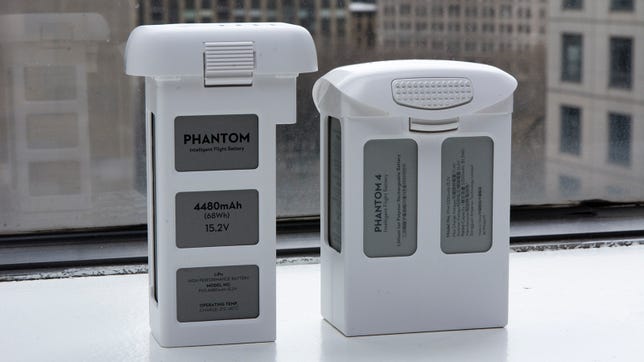
Depending on the aircraft, batteries can run you from about $5 apiece for toys to more than $100 each for camera drones.
Joshua Goldman/CNET
So you just dropped $1,000 on a new drone. Guess what? You're not done spending. At the very least, you'll want to buy a couple extra batteries, some spare propellers, maybe some prop guards and perhaps a quick charger, so you're not waiting hours to fly again. You're more than likely going to crash, which could lead to repair costs -- either for replacement parts or shipping it back to the manufacturer for them to repair. (This is exactly why DJI offers crash insurance for new drones.)
When you're shopping for your drone, see how easy it is to find replacement parts, batteries and other accessories and take note of the prices. Also, be cautious when buying third-party parts, especially batteries and chargers, which might not be the same quality as those made by the drone manufacturer.
Everyone will assume you're invading their privacy
When you're out flying in a public space, or even in your own backyard, anyone who sees you doing it will think you're spying on them or someone else. You could be standing in the middle of a 20-acre field with no one in sight and your drone no more than 50 feet directly overhead and you might end up answering questions about being a peeping Tom. I say this because it's happened to me. Repeatedly.
And along those same lines....
Everyone but you thinks they're dangerous
It doesn't matter if you're the safest pilot around or that you could do more damage hitting someone with a baseball than with some of the drones I've flown, but that won't stop onlookers from feeling a threat to their safety. And, frankly, that's completely fair.
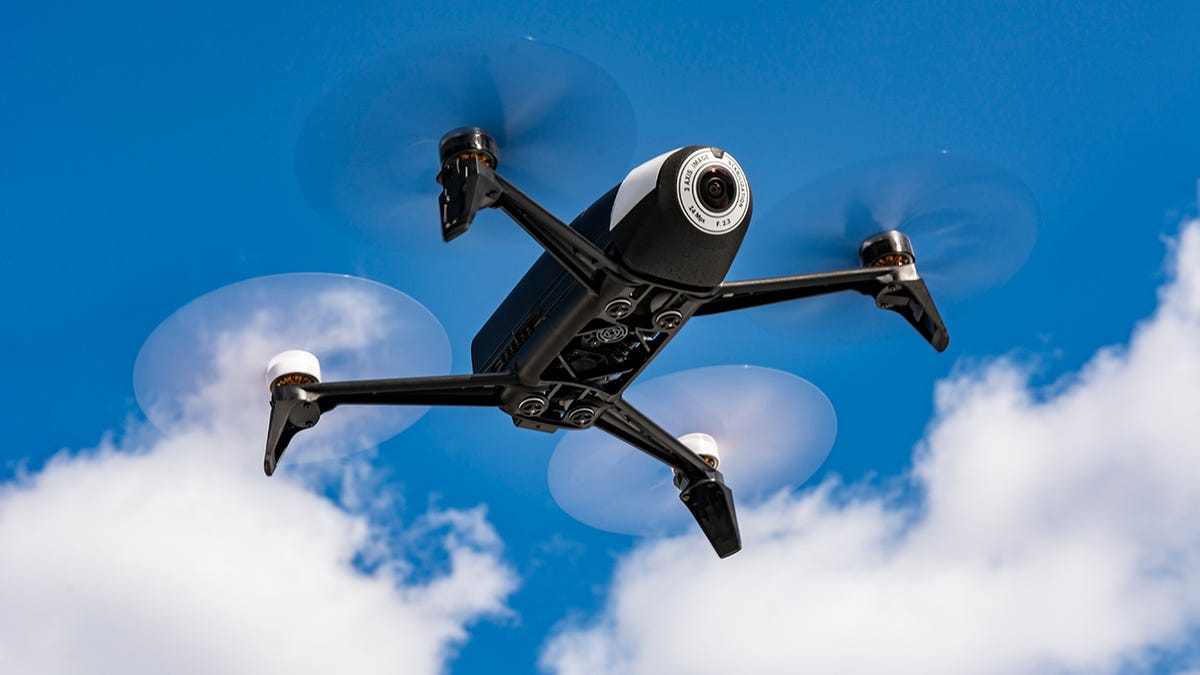
Parrot's Bebop 2 is one of the safer drones available, with props that stop instantly if they hit anything.
Joshua Goldman/CNET
Nothing about plastic blades spinning at high speeds screams "safety." Then you add in the potential for unpredictable movements or system failures, whether from 400 feet or at eye level, and you've got something pretty scary for those living by what the media feeds them.
To help calm some fears, US-based pilots may want to get an Academy of Model Aeronautics membership. Along with a whole host of benefits including access to AMA-member flying sites, a membership gives you $2,500,000 comprehensive general liability insurance as well as $25,000 accident/medical coverage, $10,000 maximum accidental death coverage and $1,000 fire, theft and vandalism coverage for members. You can also get on-the-spot insurance from Verifly. Download the company's iOS or Android app and it will quote you an hourly price for up to $2.5 million in liability coverage.
Finding places to fly can be difficult
I live in New Jersey and work in New York, and it's becoming increasingly difficult to find places to safely -- and legally -- fly. US national parks are off-limits, and in New Jersey so are all state parks. The county and municipal parks around me all have different regulations regarding RC aircraft. And then there are the no-fly zones, which makes much of New York out of bounds as well as just dangerous, because of buildings, people and cars.
Before you buy a drone -- even a toy one if you plan to fly outside -- you'll want to visit AirMap or Mapbox to check no-fly zones for places you intend to fly. In the US, you can also download the FAA's B4UFly app to check your planned location. These don't cover state or local ordinances, though, so you'll still need to check them to see if you're OK to fly.
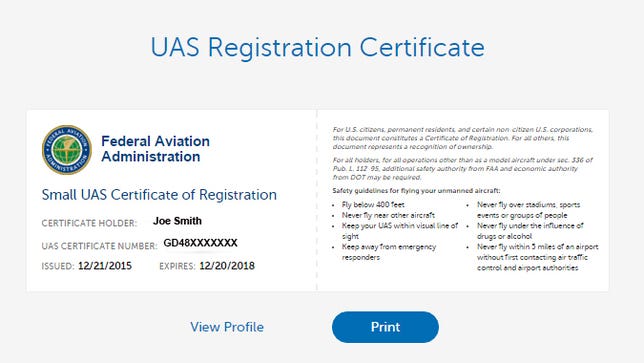
Basically, any RC aircraft except toys need an FAA registration
Screenshot by Sean Hollister/CNET
The US Federal Aviation Administration (FAA) is requiring anyone who wants to fly an unmanned aerial system (UAS) that weighs between 0.55-pound (250 grams) and 55 pounds (approximately 25 kilograms) for recreation or hobby to register with the agency. Civil penalties for not registering may include fines up to $27,500. Criminal penalties may include fines up to $250,000 and/or imprisonment for up to three years.
Most sub-$100 UASs fall under this weight. For example, all of these toy drones weigh in under that half-pound mark. A kitchen or postal scale can be used to weigh your drone or you can check with the manufacturer. Also, this applies to both store-bought and homemade aircraft.
The registration cost is $5 and it can all be done online in a matter of minutes. You don't have to register each aircraft you own, just yourself, and you'll be given a number to attach to what you're flying. That's it. Essentially, it's the FAA's way of getting you to agree that you've read its safety guidelines including staying more than 5 miles away from airports and below 400 feet.
There's no equivalent registration requirement in the UK or Australia as long as you're not using your drone for commercial purposes, although that may soon change.
Know your RTF from your FPV
Like any hobby or technology, there's a whole lot of lingo and abbreviations that come with the territory. Here are some of the ones you'll come across the most.
Ready-to-fly (RTF): A drone that requires little to no assembly and is ready to fly out of the box.
Almost-ready-to-fly (ARTF or ARF): These drones may require some minor assembly and additional equipment such as a receiver (Rx) and radio transmitter (Tx) aka a radio controller.
Bind-n-fly (BNF): BNF models are essentially RTF drones with a receiver, but not a radio controller (you must buy one separately). But you can then use that controller to pilot other BNF aircraft, saving you some money if you decide to grow your RC aircraft collection.
First-person view (FPV): The video feed direct from a camera on the drone. It can be used for framing your photos or videos as well as piloting. With drone racing, pilots usually wear FPV goggles for an immersive experience.
Return-to-home (RTH): A safety feature that allows the drone to autonomously fly back to the pilot's location or starting point.
Gimbal: A mechanical camera stabilization system that lets you get smooth video and sharp photos even with fast movements or in high winds.
Headless mode: Intended for beginner pilots, using this mode means the drone will always travel forward, backward, left or right when moving your remote's stick in those directions, regardless of which way the front of the drone is pointed.
Follow me: A feature that allows a drone to automatically follow a subject, typically using a GPS signal from a mobile device, remote control or a beacon attached to the subject being tracked.
Brushless motor: Though more expensive than their brushed counterparts, brushless motors are more efficient, last longer and are quieter.